Wednesday, November 14, 2012

Civil War Oddities #62


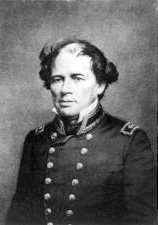
Commander Matthew F. Maury of the U.S. Navy was already renowned among oceanographers when he changed uniforms. Becoming a Confederate officer of the same rank, he played a key role in establishing a battery of submarines.

Today, memories of his wartime work are eclipsed by the fact that he was the first man to recognize of the Gulf Stream. His pioneer work in studying the world’s largest bodies of water caused the one-time Confederate commander to become known as “The Pathfinder of the Seas.”


Wednesday, November 7, 2012

Civil War Oddities #61


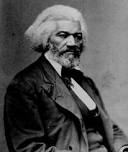
Frederick Douglass was born in Maryland around 1817, the mixed blood son of a slave, Harriet Bailey, and a white father. At about the age of twenty he escaped from slavery and settled in Massachusetts. Having committed his life story to paper, his Narrative of the Life of Frederick Douglas earned him enough money to buy his freedom.

Long before Federal authorities began to look favorably on the use of black soldiers, Douglas advocated their recruitment. Nationally renowned as a champion of black Americans, he met Lincoln several times but gave only qualified support to the president’s racial views.

Wednesday, October 31, 2012

Civil War Oddities #60


Edward Everett Hale, grandnephew of the Revolutionary War hero Nathan Hale, was born in 1822. A graduate of Harvard, he became a Unitarian clergyman who for six years before his death was chaplain of the U.S. Senate. He’d be largely forgotten today, however, had he not written for The Atlantic Monthly a short story that appeared in 1863.

Hale’s fictional account of adventures of “The Man Without a Country” was a thin veiled report of the travails of Ohio congressman Clement L. Vallandigham. Vocally opposed to the war, the editor-lawmaker made international news when he was banished from the United States because of his views.

Today, Hale’s writing is better known than is Vallandigham’s name.

Wednesday, October 24, 2012

Civil War Oddities #59


Frank and Jesse James of Clay County, Missouri, signed up as members of the home guard, a pro-Confederate force under state control. Soon they found that even the lax rules of the militia were to much for them, so when Brig. General Sterling Price left the state for Arkansas they became bushwhackers, or renegade raiders.


Little is known with certainty about their Civil War years, which have become embellished with legends. Many of these folk tales were spawned after the pair of cutthroats became central figures in the brief era known as the Wild West.

Wednesday, October 17, 2012

Civil War Oddities #58


While serving as a nurse in a Georgetown hospital, Louisa May Alcott attracted no attention at all. She went quietly about her work, seldom talked with anyone at length, and was barely noticed by those with whom she associated. Yet letters written to her family, collected and published as Hospital Sketches proved that she had more than an ordinary ability with the pen. At war’s end she gained fame with her Little Women, followed by Little Men and other novels.


Wednesday, October 10, 2012

Civil War Oddities #57


Winslow Homer’s cumulative experience of the war was derived from about eight nonconsecutive months during which he worked for Harper’s Weekly as an artist. Though he devoted much more of his time and skill to camp life than to combat, his drawing Sharpshooter became one of the most famous Civil War depictions. During postwar years the man who prepared perhaps the most notable sketch of a Federal marksman turned to tranquil subjects and gained international fame as a painter of seascapes.

Wednesday, October 3, 2012

Civil War Oddities #56


Confederate Brig. General Ben Hardin Helm was the only Southerner whose combat death caused conspicuous mourning in Washington. Having married Mary Todd Lincoln’s half-sister Emilie, he turned down his brother-in-law’s offer of a commission as Union paymaster. When Helm died from wounds received as Chickamauga, the Union commander in chief and his family went into mourning.