In January 1864, Lt. A. L. Cady of the
Twenty-fourth New York Battery was praised in newspaper throughout the north.
In the Tyrrel Country, North Carolina, he led a raid that resulted in the
capture of five guerrillas and two Confederate officers. More important, in the
opinion of the newspaper editors, “he returned to camp with one thousand sheep.
Wednesday, November 27, 2013
Tuesday, November 19, 2013
Civil War Oddities #115
Sue Chancellor, for whose family a plantation
home and a major battle were named, was a girl of fourteen at the time of what
some term “Lee’s greatest triumph.” Before she became accustomed to seeing
Confederate pickets near her home, Sue later said, a large drove of sheep came
running down the road one day without a shepherd.
As she recalled the incident, that to her always
remained vivid, a soldier asked her if she’d like to have a pet. When she
nodded, Tomas Lamar Stark of Columbia, South Carolina, picked out for her “a
beautiful white lamb.” Named Lamar in honor of its donor, the lamb remained
with its new mistress until the Chancellor mansion was burned.
Thursday, November 14, 2013
Civil War Oddities #114
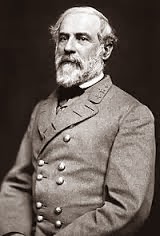
Before donning a gray uniform, Robert E. Lee once
described himself as being “very solitary.” His only companions, he said in a
letter to his wife, were “my dog and cats.” According to the lonely cavalry
officer, his dog went with him to his office every morning and lay down “from
eight to four without moving.”
During his U.S. Army days, Lieutenant Colonel Lee
once crossed the “Narrows” between Fort Hamilton and Staten Island, New York.
Halfway over the body of water, he spied a female dog with its head barely
above the waves. He rescued the animal, named her Dart, and took her home with
him.
One of her pups, Spec, was an alert and
especially affectionate black and tan terrier who once jumped out of a high
window to join the family at church. Lee was so impressed by the valor of the
animal that he permitted Spec to “go into the church afterwards, whenever he
wished.”
Wednesday, November 6, 2013
Civil War Oddities #113
Lt. A. O. Abbott of the First New York Dragoons
was among numerous Union prisoners held at Columbia, South Carolina, during the
fall of 1864. Abbott whiled away part of the time be keeping a detailed diary.
According to it, an October sunrise revealed “two strangers going through the
camp.”
The prisoners decided that they must be killed at
once, so they found an axe “and the deed was done.” The bodies of the victims
were shoved into an abandoned well just before guards began searching. As
Abbott described the eventful morning, Confederates eventually brought to light
the missing dogs, dead bloodhounds that were two of a pack around camp every
morning to discover if any “Yankees had made fresh tracks for liberty during
the night”.
Wednesday, October 30, 2013
Civil War Oddities #112
In November 1863 men of the First South Carolina
Colored Troops were forced to retreat from a site near Pocotaligo, South
Carolina. Bloodhounds were brought to track them down, but the soldiers whom
they chased were ready and waiting when the dogs drew near.
According to the Rebellion Record, the contest between men and animals was brief and
bloody: Dogs dashed into the party in advance of their comrades, the rebels.
One hound was shot, and left with broken legs upon the field. Five others were
impaled upon their bayonets of the Union troops, and brought as trophies into
their camp.
Wednesday, October 23, 2013
Civil War Oddities #111
Colonel Arthur Rankin, a Canadian abolitionist
eager to fight for the Union, secured permission to raise a large regiment.
From the beginning, Rankin made it clear that he expected his men to fight with
lances.
Newspaper editors in Toronto soon accused him of
deliberately setting out to violate the Neutrality Act. Authorities refused his
request for a leave of absence as commander of the Ninth Military District,
Canada West. Because of these rebuffs, the sixteen hundred Canadian lancers
expected by Washington to help put a quick end to the fray never entered it.
Subscribe to:
Posts (Atom)