Wednesday, December 19, 2012

Civil War Oddities #67


John Charles Fremont, known as “the Pathfinder,” explored the West as a lieutenant in the U.S. Army Topographical Engineers Corps. By the time pioneer settlers in California elected him governor he was already nationally famous. Republicans turned to him in 1865 and made him their first nominee for the U.S. presidency. Small wonder, therefore, that in July 1861 Lincoln made him a major general and put him in command of the Western Department.

Fremont may have considered himself to have a wider following that the president who gained his office by support of less than 40 percent of the nation’s voters. Without consulting his commander in chief, he issued an August 1861 emancipation proclamation that Lincoln forced him to rescind. Embittered at Washington and chafing at having been defeated at Wilson’s Creek, the Union’s most notable active general at that time resigned after just five months in uniform.


Wednesday, December 12, 2012

Civil War Oddities #66


Samuel L. Clemens had done nothing of significance by age twenty-five. As a journeyman printer and pilot of a Mississippi River steamer, he had barley managed to earn enough money for bed and board. Hence it was easy for him to turn his back on civilian life and enlist in a pro-Confederate unit that was organized in his native Missouri.


It took only a few weeks for him to decide that military life was not for him. Returning to the newspaper field as a reporter, he adopted the pseudonym Mark Twain and became the most noted American writer of the century. Despite his pro-secessionist views in early manhood, it was Twain who took a fling at publishing in order to issue successfully the autobiography of Ulysses S. Grant.

Wednesday, December 5, 2012

Civil War Oddities #65


At age twenty, the Harvard-educated son of one of the nation’s most famous volunteered for military service. He survived such battles as Ball’s Bluff, Antietam and Fredericksburg, and then hung out his shingle as an attorney. Appointed to the Massachusetts Supreme Court after fifteen years of practice, he was appointed to the U.S. Supreme Court in 1902. There Oliver Wendell Holmes, Jr., won such renown for his minority decisions that his book about his dissenting opinions, Collected Legal Papers, was widely read by members of the general public as well as by attorneys.


Wednesday, November 28, 2012

Civil War Oddities #64


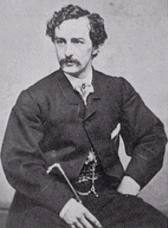
Throughout the nation, mid-century audiences clamored for a chance to see actor Edwin Booth. A son of famous actor Junius Booth, he performed in packed halls as Hamlet, King Lear, Brutus, Othello, Iago, and other Shakespearean figures.

Though not so well known, his brother John Wilkes Booth, also an actor, was admired and respected by critics and the public in both the North and South. After the April 14, 1865, assassination of Lincoln, the name of Edwin’s younger brother became more widely known than those of all other members of the Booth family.


Wednesday, November 21, 2012

Civil War Oddities #63


Ohio-born Ambrose Bierce, a prolific writer of short stories, is today most widely remembered for his sardonic Devil’s Dictionary. He fought throughout the war, and in its aftermath said his most vivid memory was that of Union soldiers slashed to death by Confederate bayonets at Shiloh.

Wednesday, November 14, 2012

Civil War Oddities #62


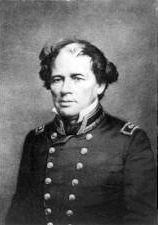
Commander Matthew F. Maury of the U.S. Navy was already renowned among oceanographers when he changed uniforms. Becoming a Confederate officer of the same rank, he played a key role in establishing a battery of submarines.

Today, memories of his wartime work are eclipsed by the fact that he was the first man to recognize of the Gulf Stream. His pioneer work in studying the world’s largest bodies of water caused the one-time Confederate commander to become known as “The Pathfinder of the Seas.”


Wednesday, November 7, 2012

Civil War Oddities #61


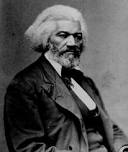
Frederick Douglass was born in Maryland around 1817, the mixed blood son of a slave, Harriet Bailey, and a white father. At about the age of twenty he escaped from slavery and settled in Massachusetts. Having committed his life story to paper, his Narrative of the Life of Frederick Douglas earned him enough money to buy his freedom.

Long before Federal authorities began to look favorably on the use of black soldiers, Douglas advocated their recruitment. Nationally renowned as a champion of black Americans, he met Lincoln several times but gave only qualified support to the president’s racial views.