Wednesday, April 3, 2013

Civil War Oddities #82


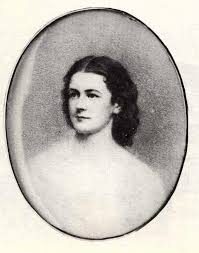
Russian-born John B. Turchin came home one day and joyfully informed his wife that he would soon be made colonel of the Nineteenth Illinois Regiment. Eyes flashing, she instantly responded, “I’m going with you, even to battlefields.”

Although at that time most of the military nurses were men, Mrs. Turchin volunteered her services and went along in an unofficial capacity. Less than a year later, now commanding a brigade, Turchin permitted his men to loot indiscriminately in Huntsville and Athens, Alabama.

Accused of having encouraged his men to plunder and rob civilians, the Federal officer went before a court-martial that recommended his dismissal from the service. Oral tradition has it that his wife promptly set out for Washington, where she managed to win an interview with Lincoln. Impressed with her account of what had taken place, the president set aside the verdict of the court-martial. Soon afterward the president submitted the name of Mrs. Turchin’s husband for confirmation as a brigadier general.

Months later, during a Tennessee campaign, the Federal general, whose baptismal name was Ivan Vasilovitch Turchinoff, became so ill that he could not sit in the saddle. Veterans who served under him vowed that for a period of ten days Mrs. Turchin took command of his unit and once briefly led it in battle.

Wednesday, March 27, 2013

Civil War Oddities #81


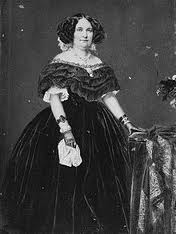
Reared near Baltimore, Hetty Cary was related to two of Virginia’s “fist families,” the Randolphs and the Jeffersons. War forced her to choose between leaving home and facing imprisonment on suspicion of harboring Confederate sympathies, so she settled in Richmond. Soon she was a leader among those working to provide clothing, food, and other necessities for soldiers.

After nearly four years of volunteer work, her activities caught the eye of thirty-two-year-old John Pegram, who sought and won her hand. On January 19, 1865, the refugee from Maryland and the Confederate brigadier general were married. Hetty enjoyed this relationship just three weeks; on February 5, 1865, the husband she found in the course of her war work was killed in the battle of Hatcher’s Run.


Wednesday, March 20, 2013

Civil War Oddities #80


As its name implies, the Mississippi River’s Island Number Ten was downstream from nine other islands. Located close to Columbus, Kentucky, it was fortified by Confederates who planned to close the river to Federal traffic. In a dramatic ship-to-shore operation, forces under Major General John Pope and Flag Officer Andrew H. Foote took over the island on April 8, 1862.

The victorious Union soldiers and sailors were dumbfounded to discover among their captives “a female invalid generally known as Harriet Redd.” Questioned, she admitted to having come to the military installation to be with her Confederate husband. Refusing a pass, Harriet said she preferred to remain with him, so she joined the men in an improvised prisoner-of-war camp.


A memorial statue was erected in 1979 to honor Harriet and her husband near Columbus, Kentucky.


Wednesday, March 13, 2013

Civil War Oddities #79


June 1862 saw Union Major General David D. Hunter embark on a special mission. Eager to free Southern slaves, he led a force against Secessionville, South Carolina. There he suffered so stunning a defeat that he suspended his military operation.

Upon returning to his base at Hilton Head, South Carolina by means of a military steamer, the thwarted abolitionist received a special kind of consolation: his wife was waiting for him at the pier of the one-time Confederate stronghold.


Wednesday, March 6, 2013

Civil War Oddities #78


Confederate Brig. General Nathan Bedford Forrest was not amused when he learned the identity of a civilian taken prisoner at Holly Springs, Mississippi, in December 1862. Because Forrest was barely able to scribble a few common words, no written records of his order has survived. His oral command probably was brief and to the point: “Pass that woman through the lines, and waste no time.”

His captive, Julia Grant, is believed to have been the only wife of a Union major general to be taken prisoner by a Confederate force.

Often accompanied by their youngest son, Jesse, Mrs. Grant was with her husband in numerous camps. When Grant settled down at City Point, Virginia, for the long siege of Petersburg, it was his wife who made sure that he frequently had “good home-cooked food.”